0 items in Cart
Your cart is empty
Coin grading directly affects what your collection is worth and how confidently you can buy, sell, or trade. Whether you're holding Morgan & Peace dollars, Indian Cents, Barber Quarters, or even certified foreign coins, understanding the grading process is the foundation of smart numismatic decisions. Accurate grading can make the difference between just another coin and a true collector's prize, so getting familiar with coin grading isn't just useful, it's crucial for your collection's integrity and value.
Coin grading stands as the standardized system used to judge the physical condition and visual appeal of a coin. You're not just checking for wear or shine, you're looking at every detail, from surface preservation to tiny marks that can make a big impact on price. Grading usually involves 5x to 10x magnification and specialized lighting, carried out by experienced professionals who know their stuff.
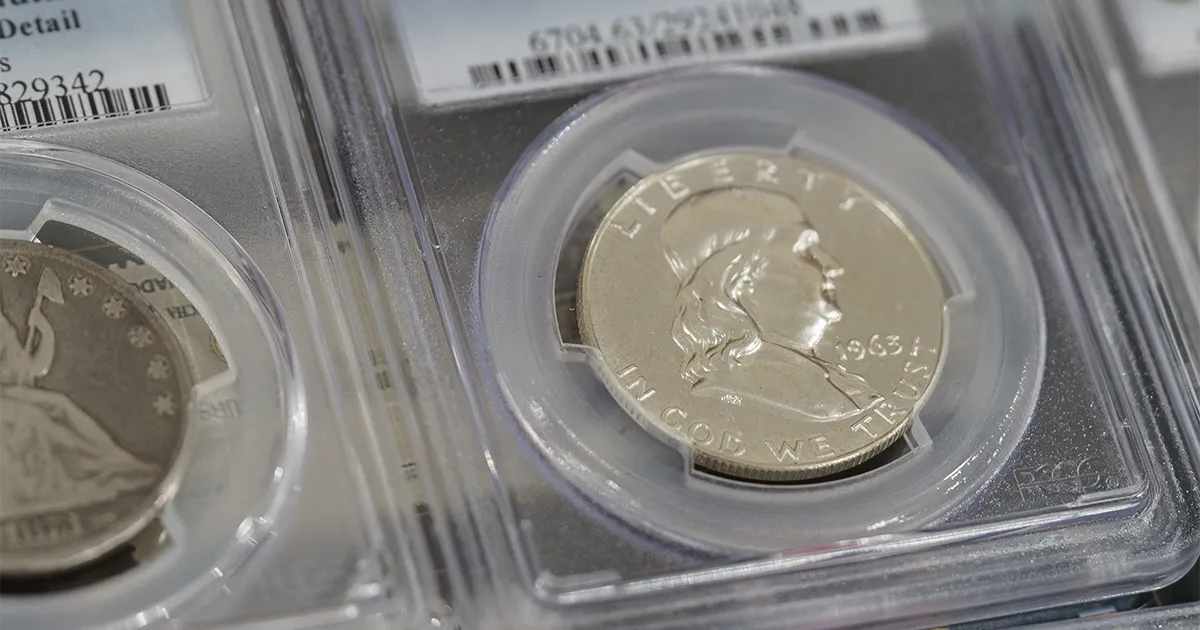
Third-party grading services exist so you can have confidence in buying or selling. Once graded, coins are sealed in tamper-proof holders with authentication included, a tamper-evident slab. This step matters for everything from Morgan & Peace dollars to international currency and modern bullion rounds. With a well-graded coin in hand, you know you've got a piece recognized for what it's truly worth.
The Professional Coin Grading Service (PCGS) has shaped the industry by ensuring accuracy and consistency. When you submit your collection, maybe a run of U.S. Gold or Washington Quarters, PCGS authenticates and assigns a grade based on the Sheldon Scale, which ranges from Poor (P-1) all the way to Mint State 70 (flawless). Special labels, such as "First Strike" or "First Day of Issue," highlight coins released within certain timeframes, often driving up demand among collectors.
Working with PCGS builds trust on both sides of any transaction. Buyers feel more confident, and sellers can often ask for higher premiums on verified coins. Every slab tells a story, and with PCGS's reputation behind each grade, you know your collection stands on solid ground.
Numismatic Guaranty Company (NGC) is another top-tier grader in the industry. They've built a following by using rigorous standards and clear labels, like MS (Mint State), PF (Proof), or SP (Specimen), alongside the same 70-point Sheldon Scale. If you've ever seen a pristine Morgan dollar in an NGC holder marked "MS-65," you can be sure it's passed some tough scrutiny.
Coins graded by NGC are encapsulated in secure holders, and they assign designations indicating levels of eye appeal, like the coveted MS/PF-70, reserved for coins with no flaws visible at 5x magnification. NGC's strict criteria help maintain the integrity of your collection, whether you're expanding your U.S. collection or picking up foreign rarities. If you're after collector-grade coins, having an NGC label goes a long way.
Dr. William Sheldon designed his 1-70 grading scale to cover every possible coin condition. While the difference between a VG-8 and an EF-40 might sound subtle, small shifts can mean hundreds or even thousands of dollars in the market. Here's what each grade really means, in plain English:
A coin at this grade is heavily worn, with major details barely visible. It might just be possible to identify the coin, but not much else. Most collectors avoid P-1 coins unless the type is extremely rare.
This grade means you can see outlines and maybe some features, but surface damage or heavy wear dominate. Even so, you'd be surprised how these survive in old U.S. collections or in bags of original dollar rolls.
G-4 coins show major design elements, even if finer details have worn off. Think of an Indian Cent where the date and basic portrait appear, but much of the surface is flat.
Still clearly circulated, but you'll make out most major details. Imagine a Barber Dime where the outline is strong and more of the legend is readable.
Coin features start to come back. LIBERTY on a Liberty Head Nickel stands out, and some hair details are visible. For everyday series like V-Nickels, this grade sees a lot of trading.
At VF-20, just minor overall wear remains. Many small features, like leaves or feathers, are strong. Collectors find this grade a sweet spot when building sets of Standing Liberty Quarters or Silver Washington Quarters.
Details remain sharp, with just light friction on higher points. You'll spot nearly all the original design. For many classic U.S. coins, this grade attracts those who want collectible but still affordable pieces.
Only traces of wear are visible on the highest points, with extensive luster left. Mint marks and field surfaces are impressively crisp.
These coins often seem uncirculated, full luster, with the faintest touches of friction on the highest spots. To build a high-end collection, AU-58 is a favorite for balancing cost and quality.
The lowest "uncirculated" grade, MS-60 coins have no wear from circulation but might show bag marks or minor imperfections from the mint. Not every Mint State coin looks beautiful, but none were spent.
Better overall quality, more appealing luster, and only small marks. If you're adding Morgan or Peace dollars to your collection, MS-63 is a solid value, nice eye appeal at a reachable price.
Sharp strike, full luster, and only a few tiny marks. Collectors love MS-65 for type coins, foreign currency, and early U.S. series looking for investment potential.
Here, coins are nearly perfect. Bold luster, precise strike, no distracting contact marks, and superior eye appeal. MS-68 pieces often head straight to the finest registry sets.
Flawless to even the closest inspection, one tiny imperfection, if any, visible under 5x magnification. MS-69 is extremely rare for anything older or for classic U.S. coins.
This is the top spot. Zero imperfections, even under strong magnification. Only a handful of modern coins make the MS-70 cut, making them a trophy piece for any collection.
Building a collection starts with the right information and the right partner. At Coin Superstore, you get experienced professionals dedicated to collectors, honest assessment, and a strong offer for coins, bullion, or currency. Whether you hold Morgan & Peace dollars, original rolls of nickels or dimes, or a selection of gold and silver bullion, you get paid top prices, and every item receives careful handling and reliable shipment, insured for your peace of mind.
Curious where to begin? Bring in your U.S. coins, foreign currency, or bullion bars for a no-pressure evaluation. If you're serious about buying, selling, or learning more about coin grading, contact Coin Superstore and let experienced numismatists guide you toward confident decisions. Don't let uncertainty hold your collection back, get a fair grade and the best deal today.